

Monday, April 30, 2012
Piper Cherokee Arrow
Project 029 has now been completed (bar some varnishing) and is a Piper Cherokee Arrow. I'm not that happy with the finished result, it was one of those projects where if something was going to go wrong it often did. This included an experiment with acrylic paint (as i have used enamel up until now). I really hated the paint so reverted to enamel but the parts that were done in acrylic first are a bit lumpy now because of the layers. Its a shame this kit was not completed to a higher standard as it meant a lot to me, i originally did this model years ago when my Nan bought me it so on this second attempt i wanted it to be perfect, still it is a lot better this time around but then again i was about 9 last time i did this kit...
 Hot on this kit's heels are the first 2 railway kits which i got last week. I am doing both 16 ton mineral wagon kits together as the older Airfix boxed model has no instructions, not that they are complicated kits but of course there is still a lot that can go wrong knowing me...

Friday, April 27, 2012
Sorting the wheat from the social media chaff
The sides of the road to a happy computing experience is littered with burnt out wrecks and abandoned ideas, that at one time seemed the cool new thing but quickly faded. This is especially true with social media. I use a number of platforms like Facebook and Twitter but there are plenty of others i tried and didn't like. Remember Friendster?
Listgeeks and Pinterest can be added to the fail pile i think, i have tried both but lack the interest to continue. They are fine sites (i know Pinterest has a lot of fans and buzz at the moment) but they are not for me. Now i have a decent smartphone at last its mobile social media sites like Instagram and Foursquare instead which have my attention. Retro photography and competing with my peers on how many mundane places i can go to is so me.
I am fickle though so it will probably all change around within a few months.
Listgeeks and Pinterest can be added to the fail pile i think, i have tried both but lack the interest to continue. They are fine sites (i know Pinterest has a lot of fans and buzz at the moment) but they are not for me. Now i have a decent smartphone at last its mobile social media sites like Instagram and Foursquare instead which have my attention. Retro photography and competing with my peers on how many mundane places i can go to is so me.
I am fickle though so it will probably all change around within a few months.
Monday, April 23, 2012
A (side) model making project
Up until now in my neo-Airfix building days i have only done aircraft (well OK one kit was a missile with a few ground vehicles) but now i have decided to branch out a bit and do some... railway rolling stock. I bought a few old Airfix kits off Ebay which all came today. Because i did not expect to win all of the auctions i ended up with 2 of everything but that is fine, it just means i have some cover if i make a mistake...


Saturday, April 21, 2012
Branches in Brownhills
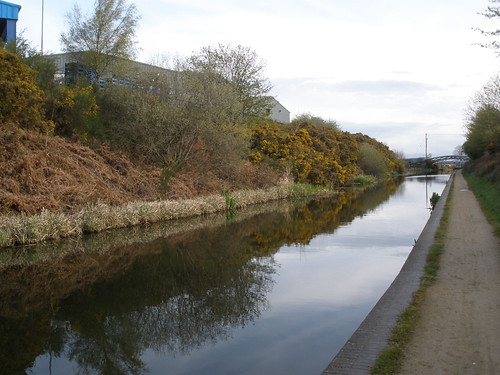
I returned to the Wyrley & Essington Canal in Brownhills for a third visit this morning, this time wanting to explore a bit of the Daw Hill Branch that eventually meets the Rushall Canal (though i didn't go that far - another day). I also explored the Anglesey Branch that heads off from Ogley Junction to finally terminate the canal in a basin. I didn't go that far but did take in some nice views, you can see my photographs here. I plan to return to the Anglesey Branch soon and complete it.
Friday, April 20, 2012
River Tame, the West Midland's mightiest river!
The river Tame is the main river in the West Midlands though is a tributary of the mighty Trent. The river's sources are in Oldbury and Willenhall which link up at Bescot and the river then flows East through the North of Birmingham before heading up to Tamworth (which gained its name from the river) and finally joins the Trent at Alrewas and then you eventually reach the North Sea via the Ouse.
 River Tame in Witton, North Birmingham
The Tame basin is the most urbanised in Britain with 42% of it in built-up areas. This has had a dramatic effect on the river with it becoming notoriously polluted during the Industrial Revolution and was once regarded as one of Britain's dirtiest rivers. Although the river has never been made navigable (although there were proposals in the 19th century to use it and the Trent to link Birmingham to the Humber) it was heavily used for industrial and agricultural processes from as early as the 12th century. However the nature of the river meant that this was later than in some other areas. A number of water mills were sited along the river in places such as Sandwell, Bromford and Minworth to grind wheat. Later on the power of water was used to drive bellows and hammers. Such was the demand of industry on the river and its feeding streams that there were often disputes between millers over water supply. Some furnaces in places like Hamstead had to be closed down due to insufficient water supply however by the 19th century steam was replacing water wheels as the primary source of power.
Erdington is listed as having a mill in the Domesday Book, which was probably Bromford Mill located near the confluence of the Tame and the Rea. Later on a fulling mill is also mentioned in the sources on the Plants Brook in Pype Hayes which used to join the Tame nearby. Both mills are known to have existed until the early 17th century. Later on Bromford Mill became a forge and machinery was installed to make nails and later wire. This site was later owned by the Rollason family and existed as a company until the 1950s. A road was later named after them during the residential expansion of Erdington in the early part of the 20th century, the road i grew up on incidentally!
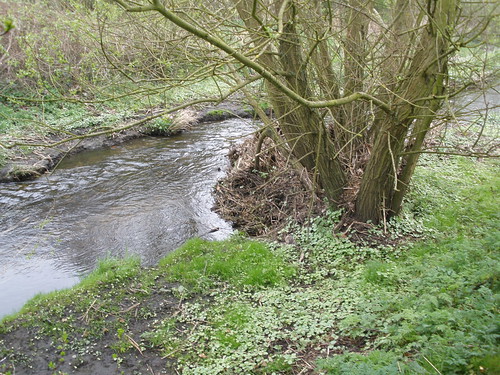
Plants Brook in Pype Hayes Park, Erdington
Much of the river's early course, especially in its Willenhall and Oldbury Arms have been modified by man. The construction of the motorways also meant that the course of the river had to be changed especially near the Gravelly Hill Interchange in Northern Birmingham and near the M5 in Bescot.
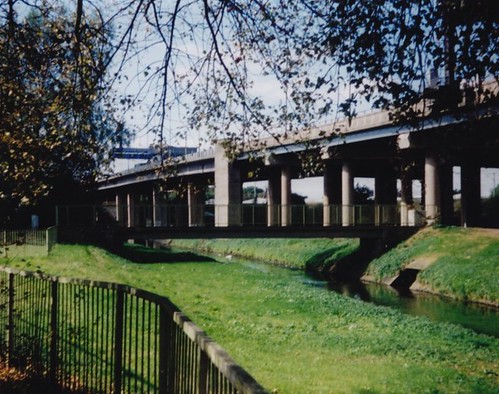
River Tame alongside A38(M) Aston Expressway, Aston
More recent remodeling from the 1980s onwards has tried to prevent flooding and also improve the habitat for wildlife. Now much of the river is a haven for wildlife including geese and swans but maybe flows quietly away from much attention as is winds its way through the big city and beyond.
W.B. Stephens (Editor). "Economic and Social History: Mills." A History of the County of Warwick: Volume 7: The City of Birmingham (1964): 253-269. British History Online. Web. 19 April 2012. <http://www.british-history.ac.uk/report.aspx?compid=22970>
Post Office Directory of Birmingham, 1867 p 359
History, Gazetteer & Directory of Warwickshire, 1850 p 84
Charles Anthony Vince, History of the Corporation of Birmingham Vol 3 1885-1899 (Birmingham: Cornish Brothers 1902), p 366
The Tame basin is the most urbanised in Britain with 42% of it in built-up areas. This has had a dramatic effect on the river with it becoming notoriously polluted during the Industrial Revolution and was once regarded as one of Britain's dirtiest rivers. Although the river has never been made navigable (although there were proposals in the 19th century to use it and the Trent to link Birmingham to the Humber) it was heavily used for industrial and agricultural processes from as early as the 12th century. However the nature of the river meant that this was later than in some other areas. A number of water mills were sited along the river in places such as Sandwell, Bromford and Minworth to grind wheat. Later on the power of water was used to drive bellows and hammers. Such was the demand of industry on the river and its feeding streams that there were often disputes between millers over water supply. Some furnaces in places like Hamstead had to be closed down due to insufficient water supply however by the 19th century steam was replacing water wheels as the primary source of power.
Erdington is listed as having a mill in the Domesday Book, which was probably Bromford Mill located near the confluence of the Tame and the Rea. Later on a fulling mill is also mentioned in the sources on the Plants Brook in Pype Hayes which used to join the Tame nearby. Both mills are known to have existed until the early 17th century. Later on Bromford Mill became a forge and machinery was installed to make nails and later wire. This site was later owned by the Rollason family and existed as a company until the 1950s. A road was later named after them during the residential expansion of Erdington in the early part of the 20th century, the road i grew up on incidentally!
Plants Brook in Pype Hayes Park, Erdington
Much of the river's early course, especially in its Willenhall and Oldbury Arms have been modified by man. The construction of the motorways also meant that the course of the river had to be changed especially near the Gravelly Hill Interchange in Northern Birmingham and near the M5 in Bescot.
River Tame alongside A38(M) Aston Expressway, Aston
More recent remodeling from the 1980s onwards has tried to prevent flooding and also improve the habitat for wildlife. Now much of the river is a haven for wildlife including geese and swans but maybe flows quietly away from much attention as is winds its way through the big city and beyond.
W.B. Stephens (Editor). "Economic and Social History: Mills." A History of the County of Warwick: Volume 7: The City of Birmingham (1964): 253-269. British History Online. Web. 19 April 2012. <http://www.british-history.ac.uk/report.aspx?compid=22970>
Post Office Directory of Birmingham, 1867 p 359
History, Gazetteer & Directory of Warwickshire, 1850 p 84
Charles Anthony Vince, History of the Corporation of Birmingham Vol 3 1885-1899 (Birmingham: Cornish Brothers 1902), p 366
Wednesday, April 11, 2012
Having fun with Instagram
One of the nicest apps on my new iPhone is Instagram which i am having fun with, hopefully Facebook won't wind it up (i'm assuming they won't considering they spend $1 billion on it!) I do only use the 1977 filter though with its retro colour feel and Polaroid frame. Maybe i should just do all of my photos this way... I suppose the fad might wear off eventually but i can get some nice effects especially when photographing something which hasn't changed a great deal since the actual 1970s, like a motorway flyover for example.
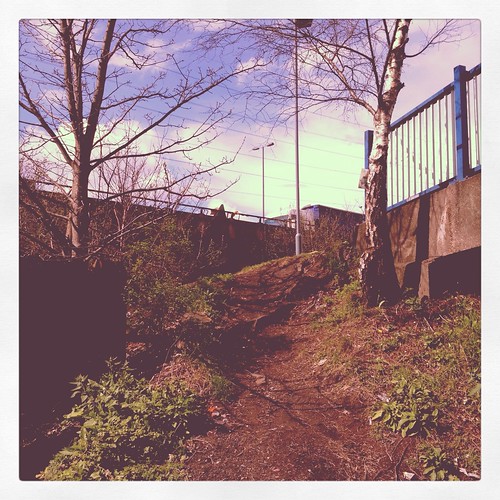
A couple of years ago i took some real retro photographs with a Kodak Instamatic loaded with 110 film. You can see some of them here. It might be interesting to compare real and pseudo retro photos of the same thing! You can see the same bridge as in the above photo (though from a different angle) here. I'll try and take some new photos in Instagram of the same view as a 110 photograph and see how close i can get to the same shot via the various filters!
A couple of years ago i took some real retro photographs with a Kodak Instamatic loaded with 110 film. You can see some of them here. It might be interesting to compare real and pseudo retro photos of the same thing! You can see the same bridge as in the above photo (though from a different angle) here. I'll try and take some new photos in Instagram of the same view as a 110 photograph and see how close i can get to the same shot via the various filters!
Subscribe to:
Posts (Atom)